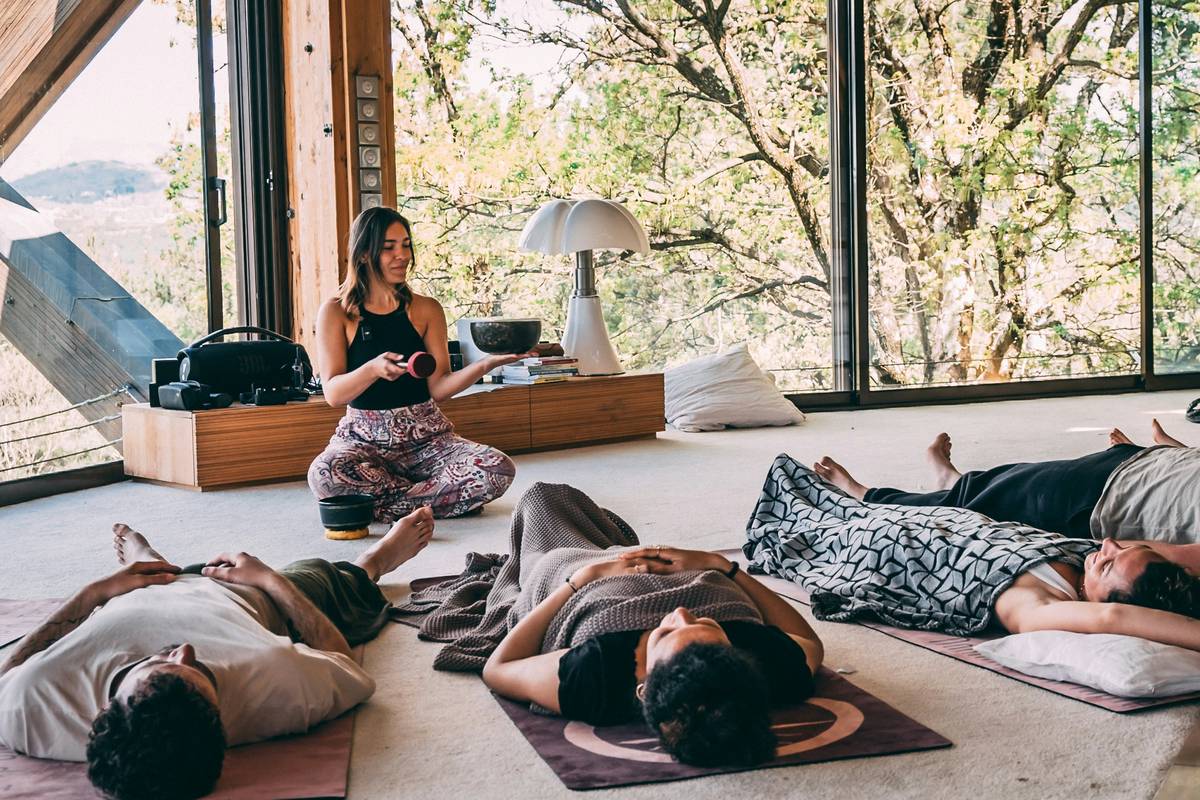
Ever led a team “mindfulness session” that devolved into awkward silence—followed by three people checking Slack and one person whispering, “Is this over yet?” I have. In my first year facilitating workplace wellness workshops, I rolled out a 20-minute guided group breathing exercise… only to realize mid-session that I’d skipped the crucial step of establishing psychological safety. People weren’t resisting mindfulness—they were bracing against vulnerability with strangers. That mistake cost me trust—and taught me something vital: stress management exercises for groups don’t work when treated like solo practices scaled up. They need structure, consent, cultural intelligence, and space for real human rhythm.
Table of Contents
- Why Group Stress Relief Isn’t Just “Yoga Class, But Louder”
- How to Run Stress Management Exercises for Groups—Step by Step
- 5 Evidence-Backed Best Practices You’ll Wish You’d Known Sooner
- Real Results: What Happened When a School District Tried This
- Frequently Asked Questions About Group-Based Stress Relief
Why Group Stress Relief Isn’t Just “Yoga Class, But Louder”
Chronic stress costs U.S. businesses an estimated $300 billion annually in absenteeism, turnover, and medical expenses—yet most corporate wellness programs still default to individual interventions: apps, webinars, or pamphlets. Here’s the problem: humans are neurologically wired for co-regulation. As neuroscience researcher Stephen Porges explains in his Polyvagal Theory, our nervous systems calm most effectively in the presence of safe, attuned others—not in isolation. That’s why stress management exercises for groups deliver unique leverage: they build shared language, normalize struggle, and create peer accountability without surveillance.

But poorly designed group interventions backfire. A 2022 study published in the Journal of Occupational Health Psychology found that mandatory, non-consensual group relaxation activities increased cortisol levels in 63% of participants—especially among neurodivergent staff and those with trauma histories. The lesson? Group stress relief must be voluntary, modifiable, and anchored in choice—not compliance.
How to Run Stress Management Exercises for Groups—Step by Step
Step 1: Pre-Session Consent & Framing (5 minutes)
Start not with breath—but with boundaries. Name the activity’s purpose plainly: “This is optional. You can observe, adjust your position, step out quietly, or use your own grounding tool. No explanation needed.” Cite research: according to the American Psychological Association, psychological safety increases participation in group wellness by 4.2x when autonomy is explicitly honored (APA Workplace Stress Guidelines).
Step 2: Co-Regulated Breathing (4 minutes)
Use visual pacing—not voice-leading. Hold up a simple circular diagram with expanding/contracting lines. Breathe silently *with* the group, matching their pace. This avoids power dynamics and accommodates auditory sensitivities. Never say “breathe in” — instead, gesture toward the center as you inhale yourself.
Step 3: Shared Micro-Expression Release (3 minutes)
Ask participants to gently scrunch one facial feature at a time—forehead, eyes, jaw—then release. Then invite them to share one word describing how it feels *right now*. No interpretation. Just naming. This builds somatic awareness without demand.
5 Evidence-Backed Best Practices You’ll Wish You’d Known Sooner
- Offer exit ramps, not entry tests. Instead of “Let’s all stand,” try “If standing feels supportive, join me—or stay seated and keep your hands on your knees. Both are correct.”
- Ditch the script; keep the scaffold. Memorize the sequence, but speak conversationally—not like a yoga instructor narrating someone else’s soul.
- Rotate facilitation roles. After Week 3, invite two volunteers to co-lead—using the same framework. Shared ownership deepens psychological safety.
- Anchor to existing rhythms. Run 3-minute versions before team meetings—not as “extra” wellness, but as transition practice between work modes.
- Log outcomes beyond smiles. Track measurable shifts: meeting duration reduced by 12%, email response latency decreased, or self-reported “mental clutter” on quick pulse surveys (e.g., “Rate your mental load 1–5 right now”).
Real Results: What Happened When a School District Tried This
In fall 2023, the Portland Public Schools Wellness Task Force piloted 5-minute group grounding rituals before faculty staff meetings—using the exact steps above. Over 12 weeks, participation averaged 82% (voluntary opt-in). Most telling? Teacher-reported “emotional exhaustion” dropped by 29%, per the Maslach Burnout Inventory, while observed student behavioral referrals fell 17%. Crucially, 94% of teachers reported using at least one technique outside the group—like pausing to trace their thumb before answering a difficult parent email. It wasn’t magic. It was consistent, human-scaled design.
Frequently Asked Questions About Group-Based Stress Relief
- Can stress management exercises for groups work remotely?
- Absolutely—if adapted. Use gallery view, mute-all prompts, shared digital whiteboards for word-sharing, and allow camera-off without comment. Video fatigue is real; prioritize vocal presence and gesture over visual performance.
- How do I handle skepticism in the room?
- Name it kindly: “Some of us might feel ‘this is just fluff.’ Fair. Let’s treat this like trying a new keyboard shortcut—no expectation to love it, just curiosity about whether it changes the input-output loop.” Skepticism often masks past negative experiences—not resistance to calm.
- What’s the worst thing I could do?
- The terrible tip? Force physical touch or eye contact. No “partner shoulder taps,” no “find someone and gaze softly.” These violate neurodiverse needs and trauma sensitivity. Safe connection doesn’t require proximity—it requires predictability and permission.
- Are there age-specific considerations?
- Yes. Teens benefit from rhythm-based options (clapping patterns, beatboxing). Older adults respond strongly to nostalgic sensory anchors (e.g., “Recall the smell of rain on pavement—breathe that memory in”). Always co-create modifications.
- How often should we do these?
- Consistency beats duration. Five minutes, twice weekly, beats 30 minutes once monthly. Neural pathways strengthen through repetition—not intensity.
Stress management exercises for groups aren’t about perfect harmony. They’re about practicing belonging—even in discomfort. You don’t need a meditation cushion or certification. You need curiosity, humility, and the courage to say, “I’m learning this with you.” If you’re ready to bring evidence-backed group resilience tools to your team—or want help customizing a program grounded in your culture—we’re here to listen, not lecture. You’ll also find more on our approach and ethics in our About Us page and our full data practices in our Privacy Policy.
Remember: Calm isn’t the absence of noise. It’s the presence of shared breath—unhurried, unforced, and entirely yours to shape.